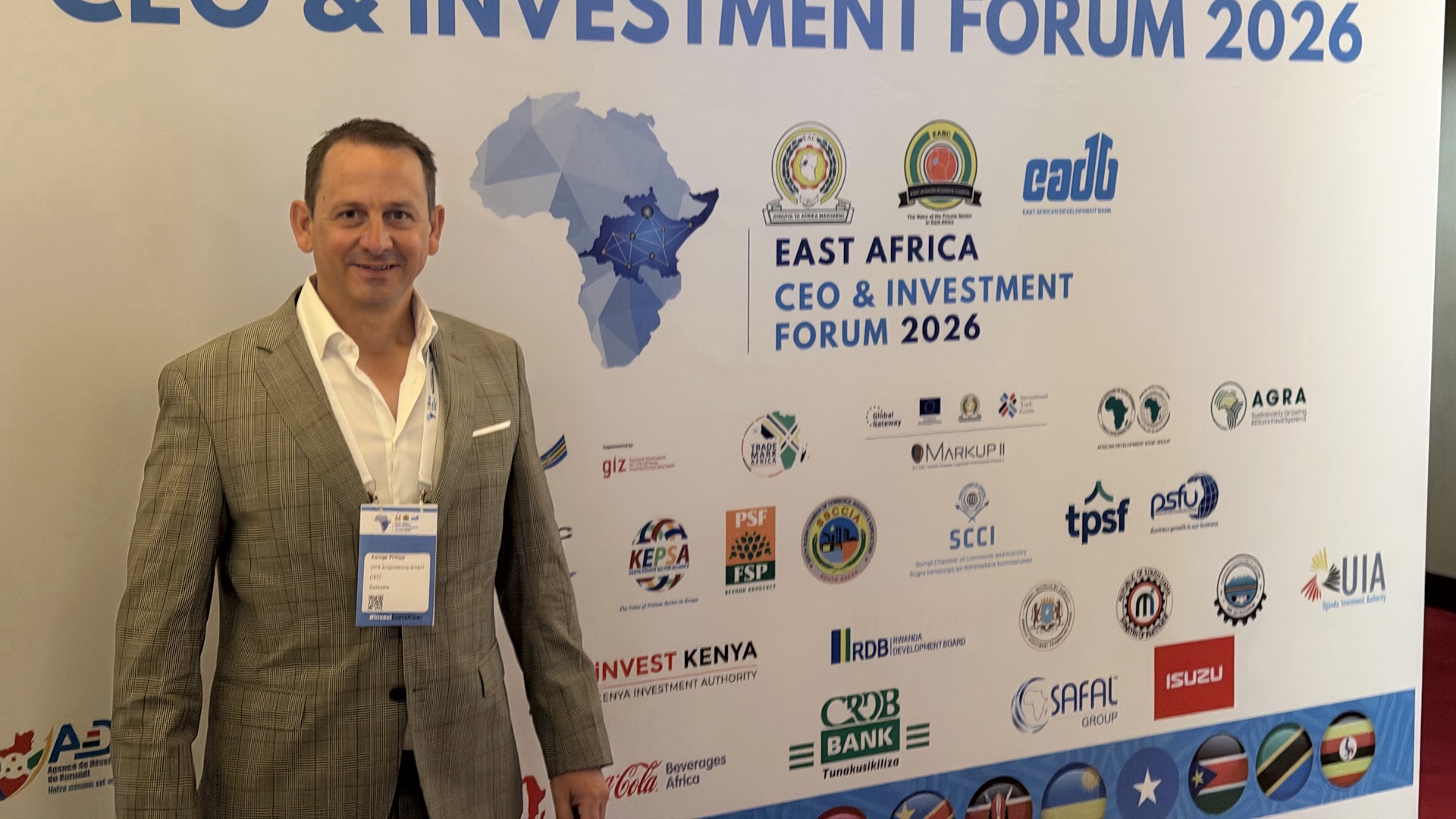
Six days, three countries, countless conversations: together with a business delegation from Hesse led by Minister of State Manfred Pentz, I travelled on behalf of DPS to Rwanda, Tanzania and Kenya. The aim of the trip, organised by the Hessian Ministry for Federal and European Affairs, International Affairs and Debureaucratisation, was to expand economic ties between Hesse and East Africa and to explore new opportunities for cooperation.
Kigali impressed me with its organisation, its young population and a palpable sense of optimism. In Dar es Salaam, I saw how international investment, local value creation and a focus on a larger regional market can come together. Nairobi, for its part, presented itself as an international business and technology hub where digital infrastructure is developing at a rapid pace.
Three countries, three very different impressions. What I quickly realised was that if you look only at the individual countries, you see only part of the picture. Many discussions centred on the region as a whole – on trade, investment, digital infrastructure and greater integration within the East African Community.
What is the East African Community (EAC)?
The East African Community (EAC) comprises eight states: Burundi, the Democratic Republic of the Congo, Kenya, Rwanda, Somalia, South Sudan, Tanzania and Uganda. Together, they are home to more than 330 million people. The EAC is working towards greater economic and political integration and has, amongst other things, a customs union and a common market. Our journey took us through three EAC states: Rwanda, Tanzania and Kenya.
Thinking about regional markets as a whole
In Tanzania, we saw just how concrete the regional outlook already is for businesses. The Knauf plant in Dar es Salaam manufactures locally, uses local raw materials and serves the East African market from there. For me, this was a tangible example of how German expertise and local value creation can come together.
A visit to the Knauf Tanzania factory in Dar es Salaam: The video shows highlights from the visit by the Hessian business delegation and the production facilities on site. (Source: Knauf Tanzania)
The Invest.EastAfrica! Forum in the Tanzanian capital also focused on the conditions for investment: infrastructure and financing, as well as a reliable regulatory framework and access to regional markets.
Rwanda, Tanzania and Kenya remain distinct markets with different conditions. At the same time, many economic issues have long been discussed across national borders. This was a theme that ran throughout our trip.
From mobile payments to cross-border payments
For me, as someone who has been involved in banking and payments for many years, it was naturally particularly interesting to see how seamlessly digital payments sometimes work in the region.
Anyone who believes that Europe first needs to explain to East Africa how digital payments work is likely to be quickly proved wrong. Mobile payments and direct account-to-account transfers are part of everyday life in many places. Sending a tip to a waiter digitally via their mobile number, topping up a mobile account at a kiosk or transferring small amounts directly: this is standard practice.
Things get interesting at the border.
The individual countries have developed their own payment ecosystems. As they become more closely networked regionally, issues come into play that are very familiar to us at DPS: interoperability, cross-border payments, instant payments and common messaging standards.
ISO 20022 as a common language
ISO 20022 also plays an important role here. The EAC is working to establish the standard as a common basis for cross-border payments. Standardised messages and structured data make it easier to connect different national payment infrastructures with one another.
We have been addressing such questions in the European payments sector for many years: How can established payment infrastructures be connected? How can common standards improve interoperability? And how does technical standardisation ultimately lead to better cross-border payments?
This is precisely where I see an interesting exchange of expertise. East Africa has many years’ experience with mobile payments and their integration into everyday life. Europe, for its part, has accumulated many years’ experience in harmonising cross-border payment infrastructures.
When e-commerce gets complicated at the border
Just how practical this can be became clear to me during a conversation, illustrated by a simple example: a customer discovers a product from another East African country via social media. Because payment, logistics and cross-border processing do not work together seamlessly, the purchase is made through acquaintances – and the parcel eventually finds its way to the recipient by bus across the border.
It works. But it also highlights the potential that lies in stronger regional connectivity. For local retailers and smaller businesses in particular, an easily accessible cross-border market can open up new customer groups.
Cross-border payments are therefore far more than just a technical banking issue. They are a building block for regional trade and e-commerce.
Digital infrastructure: Nairobi as an example
We saw another aspect of this development during our final stop in Nairobi. There, we visited a Digital Realty data centre that had opened just a few weeks earlier. I was particularly impressed by the speed at which such digital infrastructure is being developed.
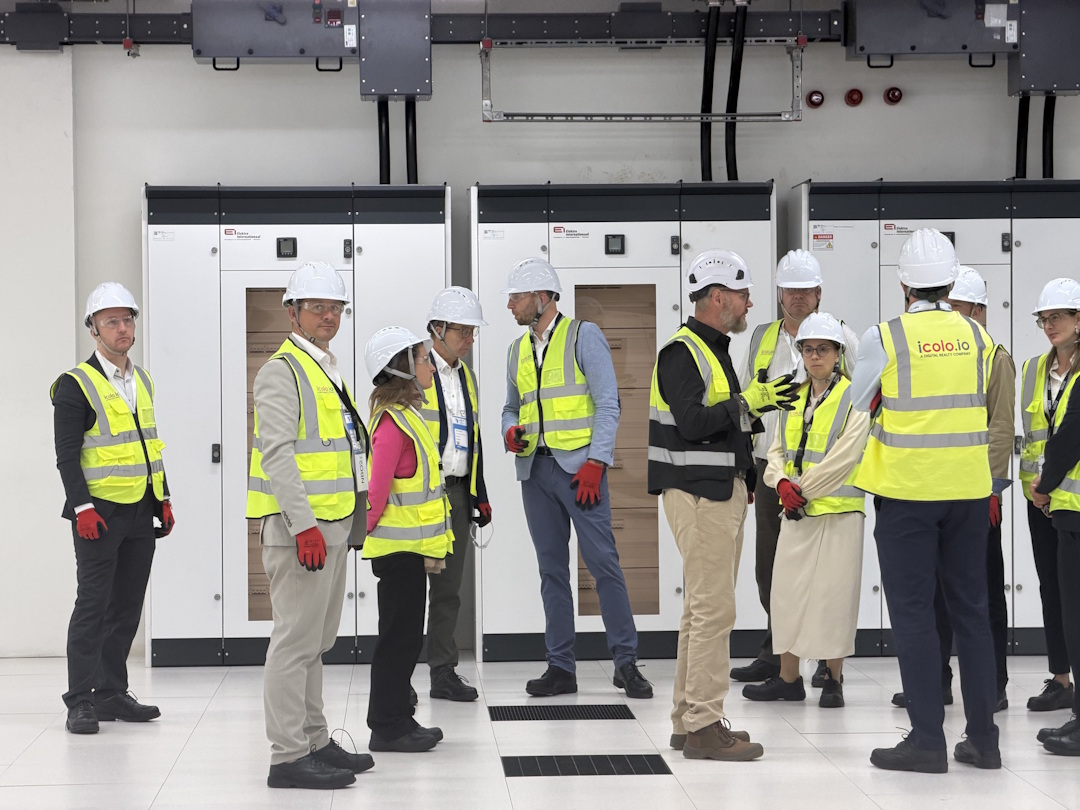
A visit to Digital Realty’s newly opened Nairobi Two Data Centre (NBO2)
In line with this, the cooperation between Hesse and the EAC on digitalisation and artificial intelligence was also expanded during our trip. A corresponding AI and digital partnership was agreed upon during the East Africa CEO & Investment Forum in Nairobi.
For me, this is precisely where a sensible approach to further cooperation lies: not in transferring ready-made European solutions, but in starting where experience and expertise complement one another, enabling joint projects and business models to emerge.
What I’m taking away from the trip
For DPS, I’m taking back to Frankfurt, above all, a specific task: we want to examine more closely where our experience with complex payment infrastructures, cross-border payments and international standards can tie in with developments in the region. At the same time, from a European perspective, it is worth noting how digital payments are already an integral part of everyday life in parts of East Africa.
For German and Hessian companies as a whole, I believe the trip demonstrated one thing above all: anyone engaging with East Africa should understand the individual countries – whilst also taking the regional perspective into account. This applies just as much to banking and payments as it does to digital infrastructure, logistics, pharmaceuticals or biotechnology.
After six intensive days in Kigali, Dar es Salaam and Nairobi, one thing is certain for me: this was definitely not my last visit to East Africa.
My sincere thanks go to Minister of State Manfred Pentz and the entire organising team at the Hessian Ministry for Federal and European Affairs, International Affairs and Debureaucratisation. The trip enabled us to have discussions and encounters that cannot be replaced by market studies or video conferences.
Thank you very much for the excellent organisation and the many insights and encounters that this trip has made possible.
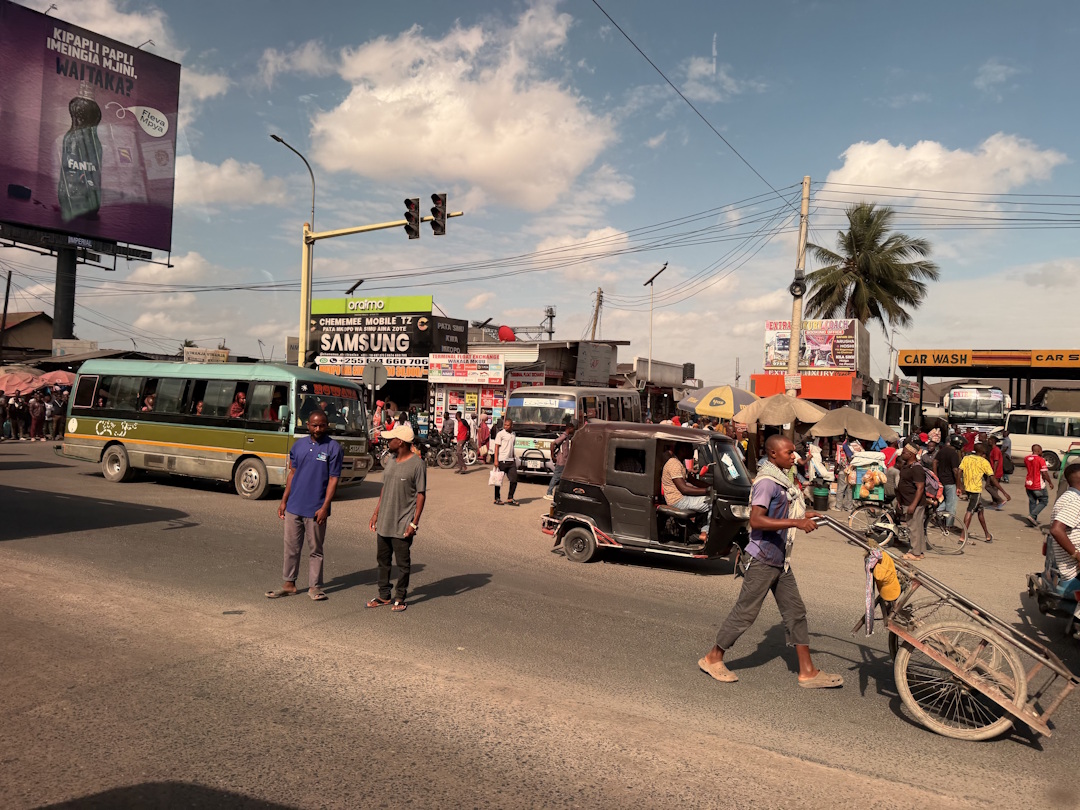
Out and about in Dar es Salaam: a street scene from Tanzania’s economic hub
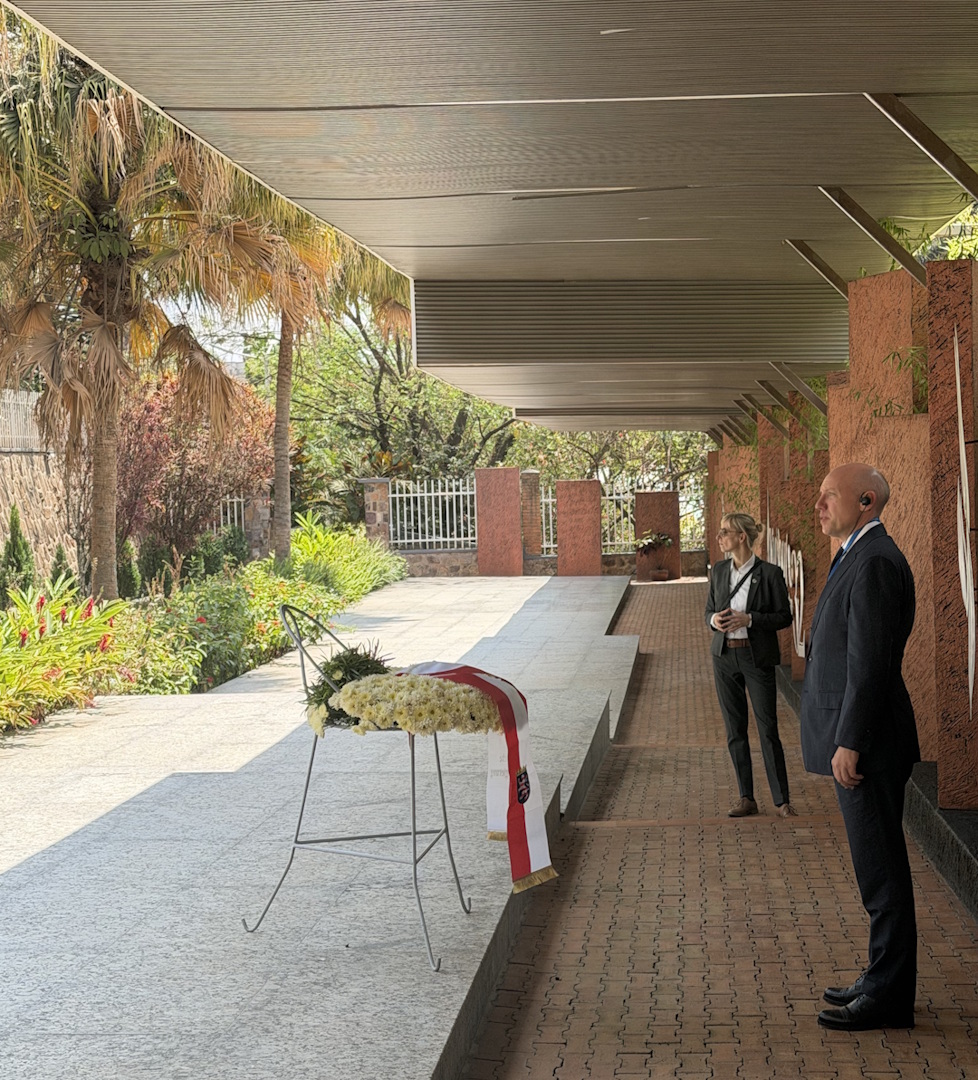 Wreath-laying ceremony by Manfred Pentz, Minister of State for Hesse, at the Kigali Genocide Memorial